


UV400 Sun and Wind Dog Goggles
UV400 Sun and Wind Dog Goggles
Couldn't load pickup availability
For the dog who goes where you go.
- Your dog comes along instead of waiting in the shade: a UV400 lens takes out the ultraviolet along with the glare coming off water, sand and snow.
- Nothing gets in around the edges: the lens curves past the outer corner of each eye and the frame is notched to sit down over the muzzle.
- They hold their setting through a run: a strap over the head and a second under the chin each slide to length, anchored at four points on the frame.
- The view stays clear while your dog is working: vents down both sides let warm damp air out instead of leaving it to sit against the lens.
- Nothing digs in over a long day: soft foam runs the whole rim, so the weight rests on the brow and the bridge of the nose.
Built for a face with a muzzle
Human sunglasses sit on a flat face. A dog's eyes are set wide and the muzzle drops away underneath, so anything straight leaves a gap at the cheek and rides up at the nose.
This frame is cut with a notch for the muzzle and curved to follow the skull. The lens is domed rather than flat, which keeps the edges out past the corner of each eye and leaves room for whiskers underneath.
Sand, snow and gravel roads
Bright surfaces throw light back up. So does water. A dog walking a dune or a shoreline at midday is squinting into it from below as well as above, and the wind is carrying half the beach along with it.
A UV400 lens takes the top off that. On a dusty trail behind a bike, the same lens is doing a simpler job: keeping road grit out.
Give it a few short goes first
Almost no dog accepts something on their face the first time. This is kit you introduce rather than kit you strap on and leave.
Put them on indoors for a minute, take them off before your dog asks you to, and build up from there. Dogs stop noticing them quickly once the association is a good one, and after that they go on with the harness.
Questions
How do dogs take to wearing them?
Better than you would expect, as long as you build up to it. Short goes indoors with something good to eat, then a walk, then the trip you bought them for.
The soft rim helps here. There is nothing hard resting against the face, so there is less for your dog to object to.
Which size should I order?
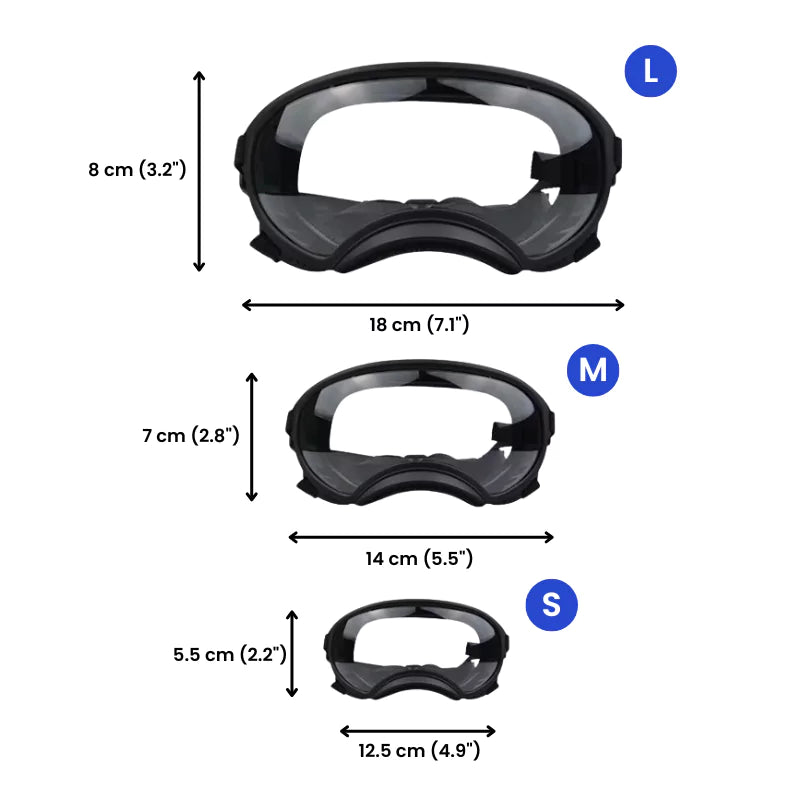
Take a tape around the head, just above the eyes and behind the ears. S covers 20 to 28cm, M covers 28 to 38cm and L covers 38 to 52cm.
If your dog lands between two, order the larger one. These come up smaller than the photos suggest, and the straps have plenty of give to take up the difference.
Do they stay put when a dog shakes?
Yes, because two straps pull in different directions. The head strap holds them back, the chin strap holds them down, and neither can work loose on its own.
Set the chin strap so it is snug without pressing, then leave it. Both sliders keep their position between outings.
What does the UV400 rating mean?
It means the lens blocks ultraviolet light all the way up to 400 nanometres, which covers both UVA and UVB. It is the same rating you would look for on your own sunglasses, and it is what separates a real lens from a dark piece of plastic.
The lens is polycarbonate, the impact-resistant plastic used in safety eyewear, and the frame is a soft TPU that flexes rather than snapping. The rim against the face is a separate foam pad, and the whole thing weighs 160 to 200 grams depending on size.


Good quality,
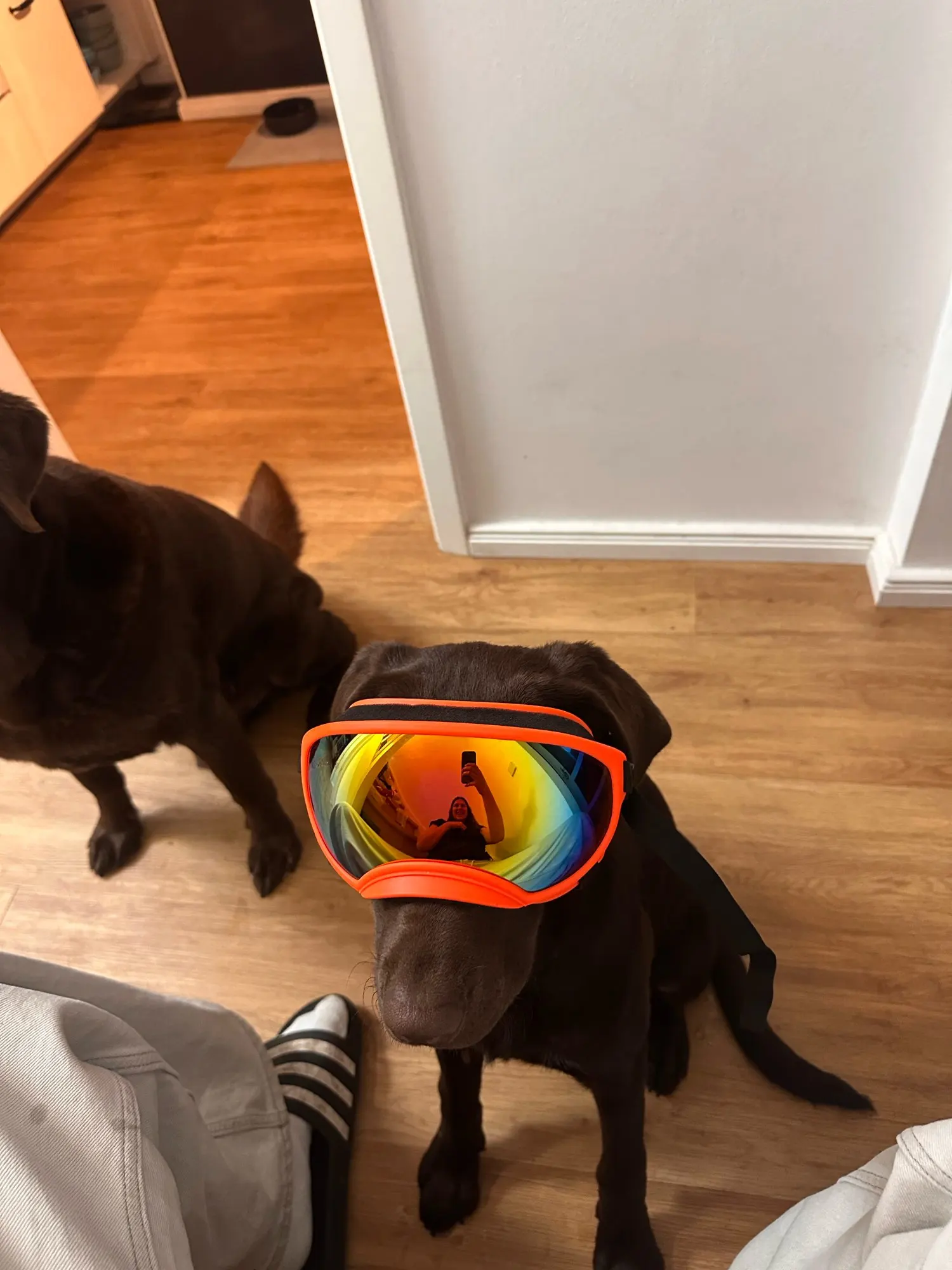
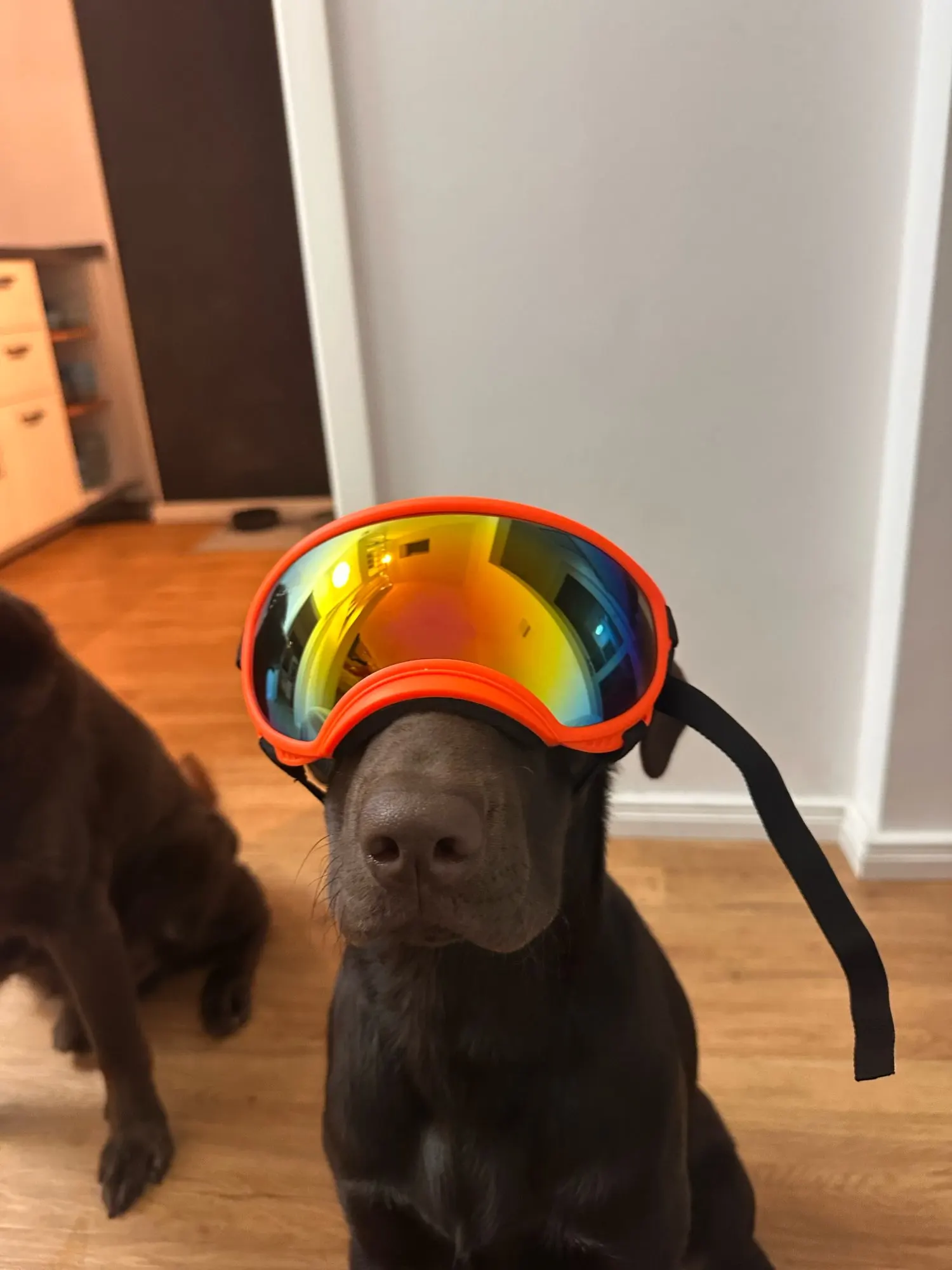
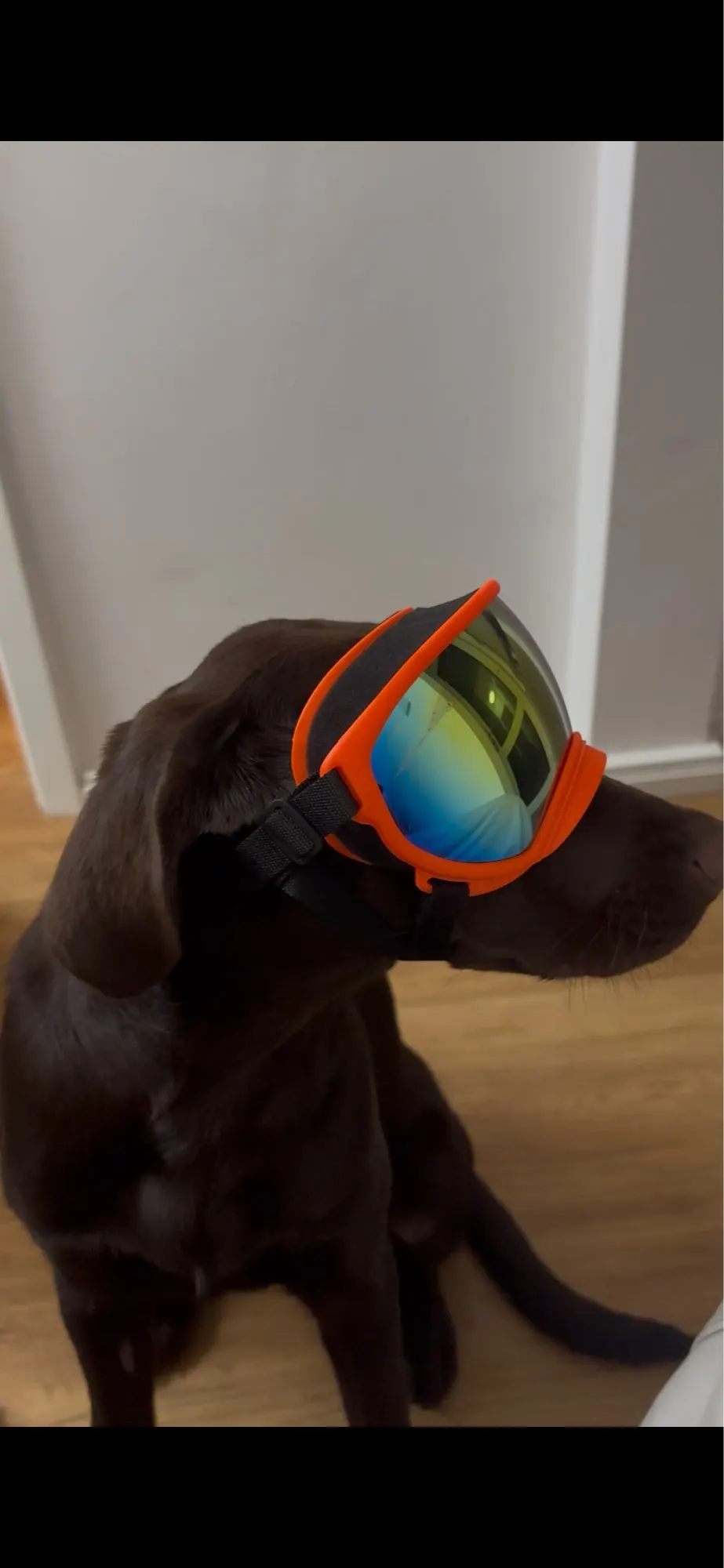
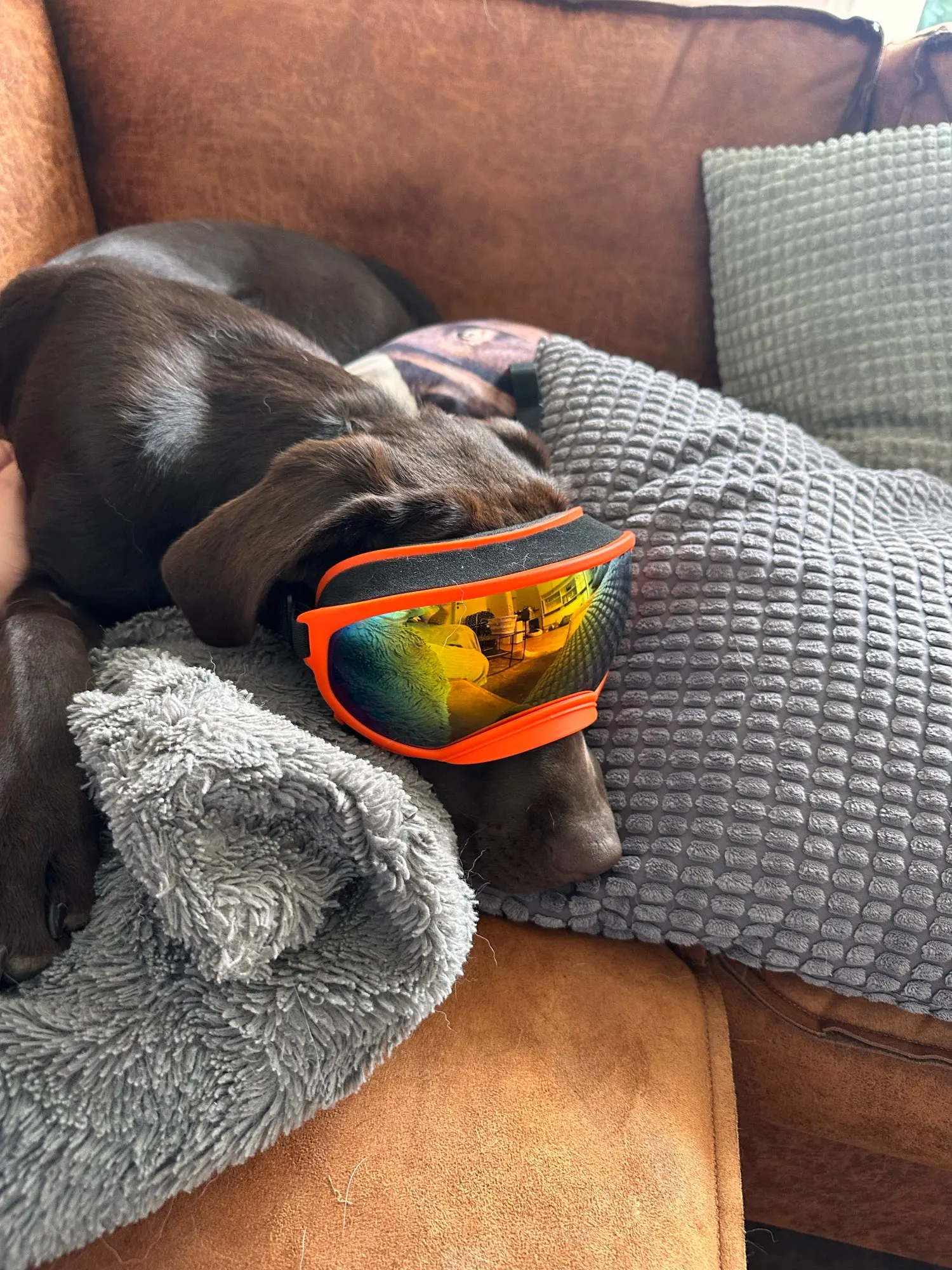
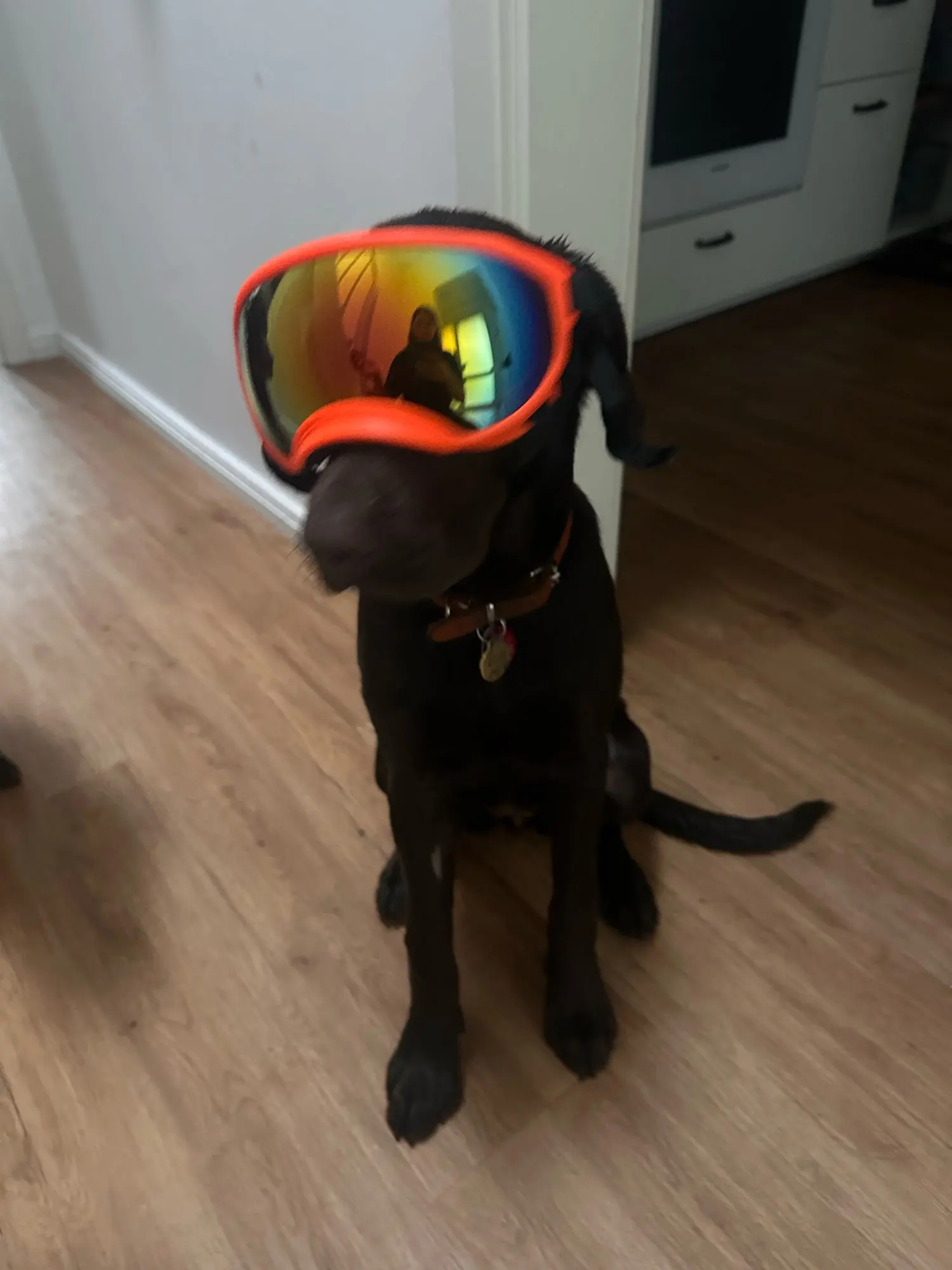
The photos show dogs that do not correspond to the product, there is no way to choose the size, and they sent me a size S that is too small for my beagle. They were of no use to me.
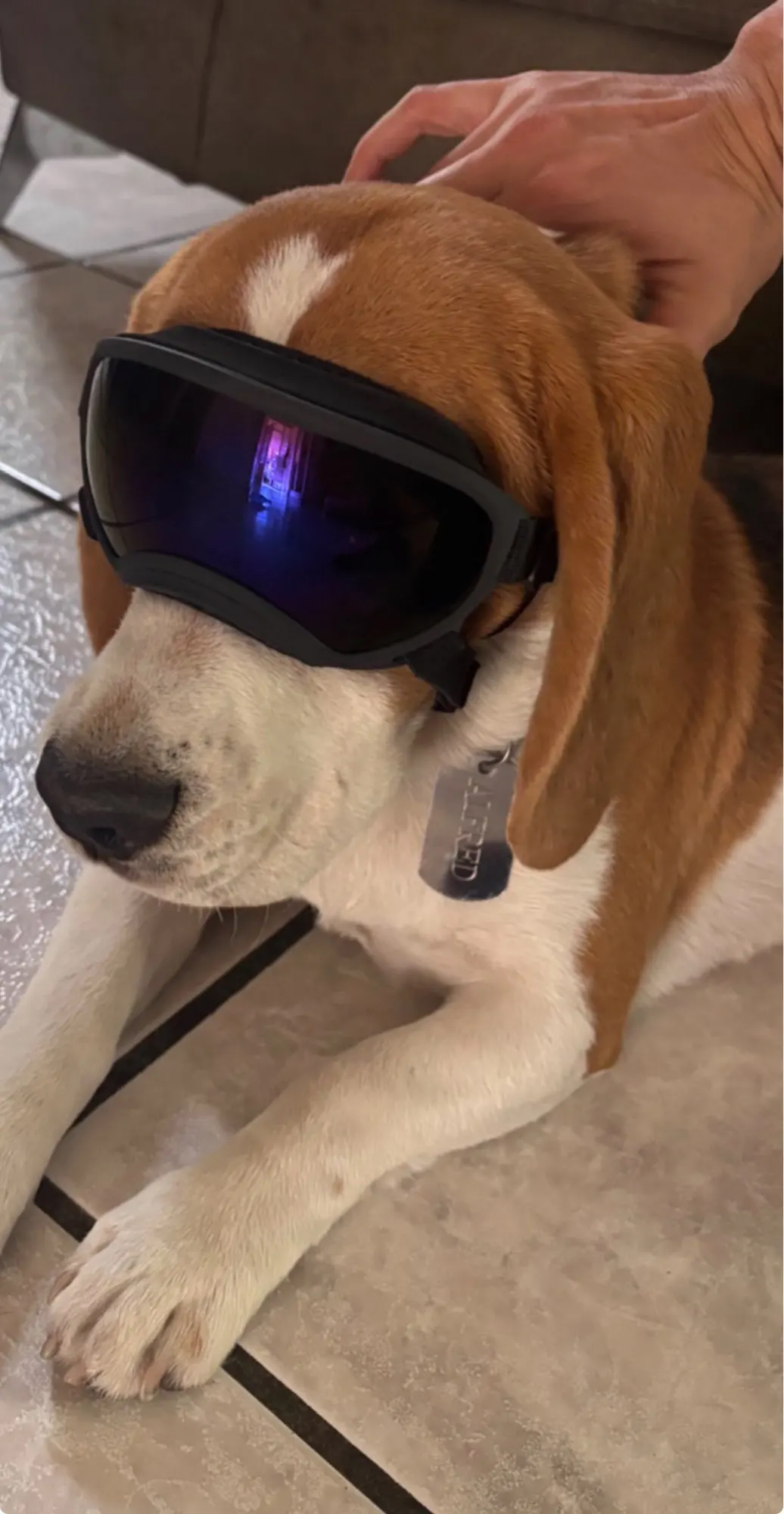
Good fit and help dog suffering with cataracts in sunlight.
Too small
The material is questionable.